Day 1: Delhi-Amritsar
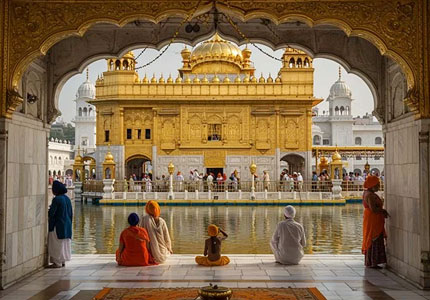
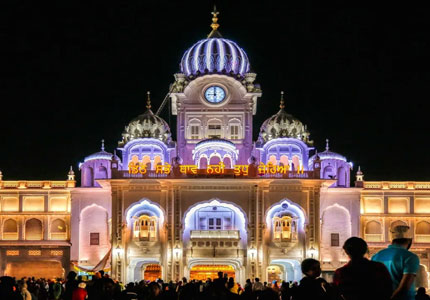
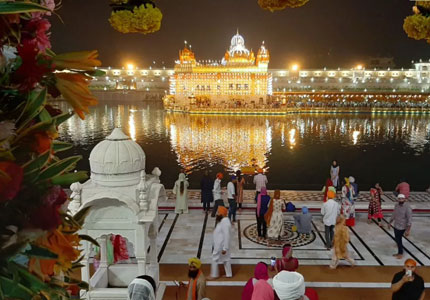
Delhi - Amritsar. Early morning transfer to the Railway station to board the Shatabdi Express train to Amritsar (air-conditioned chair car). You will be met upon arrival and transferred to your hotel. Afternoon is at leisure. Later Evening visit to Golden Temple at the time of sunset, enjoy the experience of (Day Light to Night View). Overnight stay in Amritsar.
Day 2: Gurudwara Darshan Amritsar
Start your day with visit again Golden Temple. Later visit Gurudwara Akal Takht Akal Takht of the Timeless One or the Seat (Throne) of God. It is one of the five seats of temporal physical religious authority of the Sikhs. Akal means The Timeless One - another term for God. Takht means 'seat' or 'throne' in Persian. Akal Takht is located in the Harmandir Sahib complex in Amritsar, Punjab, and faces the Darshani Deohri.
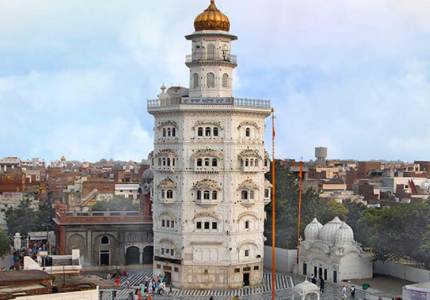
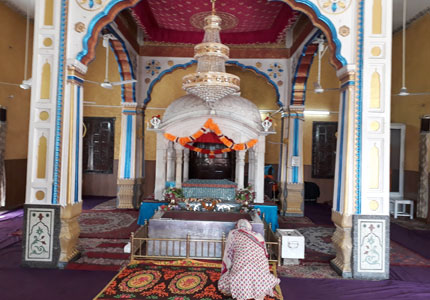
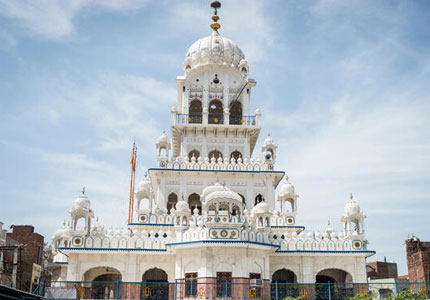
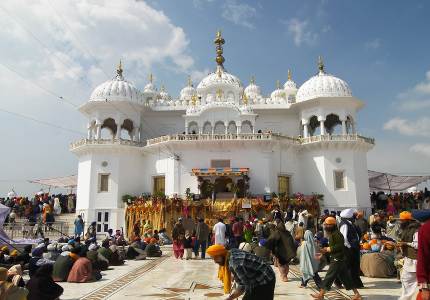
After Akal Takht visit GURDWARA BABA ATAL SAHIB, A 9 storey octagonal tower, over 45 metres high, standing close to the Kaulsar pool about 200 metres southeast of the Harimandar, marks the spot where Baba Atal Rai, 9 year old son of Guru Hargobind, passed away on 9 Assu 1685 Bk/ 13 September 1628. See ATAL RAI, BABA. A simple memorial in honour of Baba Atal was raised on the site originally. The construction of the present edifice commenced after the Sikh misls had established their authority in the Punjab. The cornerstone was laid in 1770, and the first three storeys had been completed by 1784. The upper floors were raised by Maharaja Ranjit Singh during the 1820s. Sardar Desa Singh Majithia contributed the gold for gilding the dome at the top. The Guru Granth Sahib is seated in a small inner room on the ground floor. The first six storeys are larger than the upper ones, which rise above the central sanctum. The doors on the ground floor, four in number, are decorated with embossed designs on brass and silver sheets. Interior walls and the ceiling are covered with murals depicting scenes from the lives of Guru Nanak, his two sons and nine successors, Guru Gobind Singh's four sons and Baba Buddha.
In olden days, the ground around Baba Atal Sahib (as the building is popularly called) was used as a cremation ground, and the area was dotted with samadhs (memorial shrines) raised for eminent sardars (chiefs), saints (holy men), and warriors. The shrine was taken over by the Shiromani Gurdwara Parbandhak Committee in August 1921. During the process of widening the parikrama, most of the samadhis were demolished. Those surviving include the ones commemorating Jassa Singh Ahluvalia and NawabKapur Singh.
Visit GURUDWARA SANTOKHSAR SAHIB
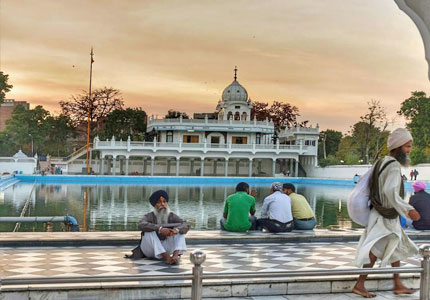
Gurdwara Santokhsar Sahib is a historical sikh shrine, situated at a distance of 700 Meters from Harimandir Sahib. This is one of the five historical sarovers constructed by Guru Arjun Dev. Later GURUDWARA KAULSAR SAHIB
This is the Sarovar next to the Gurdwara Mata Kaulan near Gurdwara Baba Atal in Amritsar, next to the main Darbar Sahib at Harmandar Sahib. It is named after a holy lady who was raised as a Muslim, called BibiKaulan, the adopted daughter of the Qazi of Lahore. Gurdwara Santokhsar Sahib is a historical sikh shrine, situated at a distance of 700 Meters from Harimandir Sahib. This is one of the five historical sarovers constru
Day 3: Gurudwara Darshan Amritsar
After breakfast at the hotel, start your tour to visit GURUDWARA BABA DEEP SINGH, Amritsar: The great Sikh scholar and martyr Baba Deep Singh was mortally wounded here when in 1762 the Afghan invader Ahmed Shah Abdali ordered the Harmandar Sahib blown up and the Sacred Tank filled in. Baba Deep Singh, the greatest Sikh scholar of his time, took up the sword on a mission to restore the sanctity of the Sikhs' most revered Temple. He, along with five thousand faithful Sikhs, fought against the Muslim forces of Jahan Khan. Although heavily outnumbered, the Sikhs fought bravely.
GURDWARA RAMSAR SAHIB
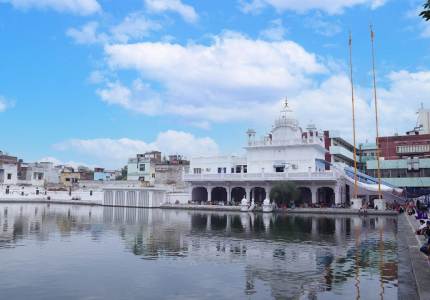
Gurdwara Ramsar stands alongside the Ramsar Sarovar, the smallest of Amritsar's five holy sarovars. Located near Chativind Gate, on the south-eastern side of the walled city of Amritsar, the present Gurdwara Ramsar is a small marble-lined hall topped by a gilded, fluted lotus dome.
GURDWARA BIBEKSAR
Bibeksar Sahib (built 1628). This sarovar is located south/south-east of the most important landmark for the Sikhs, Harimandir Sahib, in the city of Amritsar. Gurdwara Bibeksar Sahib is situated on the banks of the Bibeksar Sarovar. The sarovar was built by Guru Hargobind Sahib, the 6th Sikh Guru, and the present beautiful Gurdwara was built by Maharaja Ranjit Singh.
GURUDWARA LOHGARH SAHIB
Gurdwara Lohgarh Sahib is situated in the village Dina, 15 km south of Nihal Singh Wala, in the Moga district of Punjab. It is on the Barnala–Nihal Singh Wala road, which is a single metal road and is in good condition. It is 6 km from Salatwatpura, 12 km from Nihal Singh Wala, and 13 km from Bhadaur.
GURUDWARA PIPLI SAHIB
News of the sacred enthronement of Sri Guru Arjan Sahib spread around, and the devotees eager to have a direct glimpse of Nanak the Fifth set out for Amritsar from distant places. In this spiritual quest, the sangat from Kabul was also on its way to Amritsar. On the last day of their journey, they were determined to reach the holy presence of the New Guru, but could not make it and had to camp a few miles away from Sri Harimandir Sahib. The Sangat included the old, the young, and the children. Tired and hungry, they now yearned for a blessed vision of the Holy Guru the next morning. Overnight Stay Amritsar.
Day 4: Gurudwara Darshan Amritsar
Breakfast at the hotel, start your tour to visit GURDWARA CHHEHARTA SAHIB
is situated on the Amritsar-Gurusar Sultan Road, near village Guru Ki Vadali, seven kms from Amritsar. Guru Ki Vadali is the birthplace of the Sixth Guru, Sri Guru Hargobind Sahib, the son of Guru Arjan Dev Ji. To celebrate the birth of his son, Guru Arjan Dev Ji constructed a big well at this place. This well had six Persian wheels to draw out the water and thus came to be known as Chheharta, the well with six wheels. This helped in removing water scarcity in the region and enabled the greening of the fields.
Gurdwara San Sahib
is situated in the village of Basarke in Amritsar District, Punjab, India. Guru Amar Das Ji was named the next Guru by Guru Angad Dev Ji, but Datu Ji, the son of Guru Angad Dev Ji, was, like Guru Nanak's son, sure that as the Guru's son, he should be appointed the Guru. He forced Guru Amar Das Ji to leave Goindwal Sahib. Guru Amar Das Ji, being a humble person, returned to his family village of Basarke.
Here, the Guru shut himself up in a small hut with a note on the door. The note said, "He who opens this door is no Sikh of mine, nor am I his Guru." When a delegation of Sikhs led by Baba Buddha Ji found the hut, they were perplexed about what to do. Finally, Baba Buddha Ji decided to make a hole in the wall so as not to go against the Guru's instruction.
Once inside, they pleaded with the Guru to return to Goindwal Sahib as only he was their true beloved Guru and the Sikhs could not live without him. Guru Amar Das Ji finally relented and returned with the Sikhs. The hole in the wall is still preserved today inside the Gurdwara Sahib. Gurdwara Sahib is situated on the Amritsar-Chaubal Road.
GURDWARA BABA BUDDA SAHIB BABA BUDDHA JI
spent much of his life here. Guru Arjan Dev Ji also visited this place at some stage. Also known as Gurdwara Bir Baba Buddha, this is situated in the revenue limits of the village of Thatta, 20 km south of Amritsar. The shrine honours and commemorates Baba Buddha (1506–1631), the venerable Sikh of the time of Guru Nanak, who lived long enough to anoint five succeeding Gurus.
He spent many years looking after the "bir", literally a reserved forest used for cattle grazing, said to have been offered to Guru Arjan Dev Ji by Chaudhari Langah of Patti out of his private lands. According to Gurbilas Chhevin Patshahi, it was here on 21 Assu 1651 Bk / 20 September 1594, that Mata Ganga, the wife of Guru Arjan Dev Ji, received blessings for an illustrious son (the future Guru Hargobind, Nanak VI) from Baba Buddha Ji.
GURUDWARA BABA BAKALA
Before death at Delhi on March 30, 1664, Guru Harkrishan Ji uttered these words 'Baba Bakala', thereby meaning that his successor was to be found at Bakala village in Amritsar. In Bakala, many men then claimed to be the Guru's successor. This was the first time a Gu
Day 5: Departure
After breakfast, drop off at Amritsar airport for onward journey.




Book Amritsar Gurudwara Tour